


Dental Implant Surgery Recovery Time: Healing Stages, Pain Management & Aftercare Tips
Key Takeaways
- Dental implant recovery occurs in stages: initial and soft-tissue healing takes 1–2 weeks, and full osseointegration (when the implant fuses with the jawbone) typically takes 3–6 months.
- Mild to moderate discomfort is normal in the first few days, and pain can usually be managed with over-the-counter (OTC) pain relievers, cold compresses, and any prescribed medications from your dentist.
- Swelling, bruising, and minor bleeding are common early on, but can be minimised by resting with your head elevated, avoiding strenuous activity, and steering clear of hot foods, straws, and smoking during the initial healing window.
- Proper aftercare involves gentle brushing around the implant site, rinsing with warm salt water, eating soft foods, and maintaining follow-up appointments.
- Choosing the right provider makes all the difference. At Arnold Dental & Implant Centre, we manage every step of your implant journey in-house using advanced digital technology, bespoke surgical guides, and a personalised approach to ensure a smoother recovery and lasting, natural-looking results.
What is the Recovery Time for Dental Implant Surgery?
Here’s the honest picture: the surgical wound in your gum heals relatively quickly, usually within two weeks. But the implant itself is a titanium post that needs to physically bond with your jawbone, and this takes longer than two weeks.
The total timeline from implant placement to your final crown typically runs 3–6 months, depending on several factors, including bone density, the number of implants placed, and how well post-operative instructions are followed.
OTC pain relievers and simple ice packs can help manage the pain. However, what matters most is that you respect each stage of healing and implement daily aftercare habits, such as using gentle saltwater rinses and avoiding smoking, drinking alcohol, and other lifestyle habits that can compromise your implant.
Arnold Dental & Implant Centre: Nottingham’s Complete Smile Solution
GDC-Registered Team | Implants to General Care | Trusted Local Dental Care

Arnold Dental provides end-to-end dental care for the whole family, from routine check-ups to life-changing implant treatments. Their fully managed implant process, from consultation through to restoration and aftercare, replaces missing teeth with natural-looking, permanent results, handled entirely in-house to save you time and cost
What you get:
✓Dental implants managed start to finish, including bespoke surgical guides and digital planning
✓Full smile restorations combining implants, bridges, veneers, and whitening
✓Preventive and restorative care, orthodontics, and facial aesthetics under one roof
✓All clinicians registered with the General Dental Council
Your smile deserves expert care from people who know your name.
The 4 Dental Implant Recovery Stages
Dental implant healing follows a predictable biological sequence. Each stage builds on the last, and disrupting one can set back the others.
Stage 1: The First 24–48 Hours After Surgery
The first two days set the tone for everything that follows. Immediately after surgery, a blood clot forms at the implant site. This clot is a critical part of the healing process, and dislodging it can lead to a painful complication and significantly delay healing.
Swelling typically peaks around the 48-hour mark, which is why applying an ice pack in 20-minute intervals during the first day is so effective at controlling it.
Rest is non-negotiable. Keep your head elevated, even while sleeping, to reduce blood pooling at the surgical site. Stick to cool or room-temperature liquids. Do not use a straw or eat anything hot.
Stage 2: Early Soft Tissue Healing (Days 3–14)
By day three, swelling usually starts to subside, and the sharpest pain begins to ease. Your gum tissue is actively closing around the implant post during this window. Gentle saltwater rinses (typically 1/2 teaspoon of salt in 240 ml of warm water) help keep the area clean without disrupting the healing tissue.
A soft-bristled toothbrush can be carefully reintroduced around the surrounding teeth, but avoid direct contact with the implant site until your dentist clears you.
Most patients feel close to normal by the end of week two. Sutures are typically removed at a 7–10 day follow-up appointment, and by this point, soft-tissue healing is well underway, though the implant is far from fully integrated.
Stage 3: Initial Bone Integration (Weeks 2–6)
This is where the real work happens, and it’s almost entirely invisible. Bone cells gradually attach to the surface of the titanium post, a process that begins in earnest during weeks 2–6.
You won’t feel much during this stage, which can make it tempting to return to normal habits too quickly. Resist that urge. Hard or crunchy foods can place lateral pressure on the implant and disrupt early bone attachment before it’s stable enough to handle the stress.
Stage 4: Full Osseointegration (Months 2–6)
By months two through six, the titanium implant becomes structurally integrated with the surrounding bone. This is what gives dental implants their legendary durability. When osseointegration is successful, the implant behaves almost identically to a natural tooth root.
Your dentist will confirm integration using X-rays and clinical assessment before proceeding with placing the abutment and final crown. Skipping or delaying this confirmation step is a mistake.
How to Manage Pain After Dental Implant Surgery
Pain after dental implant surgery is real, but it’s almost always manageable, and you need to have a clear pain management plan before you leave the dental practice.
OTC vs. Prescribed Pain Relief
For most straightforward implant placements, Nurofen or paracetamol taken on a scheduled basis provides effective relief during the first 72 hours. Nurofen has the added benefit of reducing inflammation, making it particularly useful in the first two days.
If you’ve had multiple implants placed simultaneously, a bone graft, or a more complex surgical procedure, your oral surgeon may prescribe a stronger analgesic for the first few days. Always take prescribed medications exactly as directed, and never combine prescription pain relievers with OTC options without your dentist’s guidance.
Ice Packs & Swelling Control in the First 48 Hours
Ice is your best friend in the first 24 hours after dental implant surgery. Applying an ice pack to the outside of your cheek in 20-minute on, 20-minute off intervals during the first day significantly reduces swelling before it peaks.
Keep your head elevated as much as possible, including during sleep. Propping yourself up with two or three pillows prevents blood from pooling at the surgical site, thereby reducing both swelling and throbbing discomfort.
Swelling typically peaks around 48 hours post-surgery and gradually subsides over the following 3 to 4 days. Some patients also notice mild bruising along the jaw or cheek. This is normal and resolves on its own. If swelling is increasing after 72 hours rather than improving, that’s worth a call to your dental provider.

An ice pack can greatly reduce swelling within the first 24 hours of a dental implant surgery.
Daily Aftercare Habits That Protect Your Implant
The habits you build during the recovery period directly influence both the success of osseointegration and the long-term health of the implant. Fortunately, the routine is straightforward once you understand the reasoning behind each step.
Keep the Implant Site Clean Without Disrupting Healing
For the first 24 hours, do not rinse your mouth at all, even with water. After that, gentle saltwater rinses after meals help keep the site free of bacteria without mechanical irritation. Do this two to three times daily, letting the solution gently roll around your mouth rather than actively swishing it.
From day three onward, you can carefully brush the surrounding teeth with a soft-bristle toothbrush. Avoid the implant site itself until your dentist clears you to do so. When you do begin brushing near the implant, use light, circular strokes and an extra-soft toothbrush.
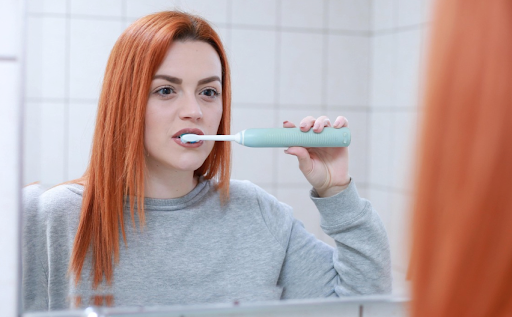
Use a soft-bristle brush to carefully clean the surrounding teeth, avoiding the implant itself until your dentist gives you the all-clear.
Implement a Long-Term Oral Hygiene Routine
Once the implant is fully integrated and the final crown is in place, maintaining it requires a consistent hygiene routine.
Brush twice daily with a soft-bristled toothbrush and non-abrasive toothpaste. Floss daily using implant-specific floss or a water flosser. Interdental brushes are also highly effective for cleaning around the base of the implant crown, where plaque tends to accumulate.
Professional cleanings every six months are also essential. During these cleanings, your dental hygienist will use non-metallic instruments around the implant to avoid scratching the titanium surface, which can create rough spots where bacteria accumulate.
Avoid Smoking or Drinking Alcohol
Smoking is one of the biggest lifestyle risk factors for dental implant failure. Nicotine restricts blood flow to the gum tissue and bone, directly impairing the healing response that enables osseointegration.
Studies consistently show significantly higher implant failure rates in smokers compared to non-smokers. Therefore, you must avoid smoking throughout your recovery window.
Alcohol is another concern during the recovery window. It interferes with the body’s healing mechanisms, can interact negatively with prescribed medications, and contributes to dry mouth, creating an environment where oral bacteria thrive.
Most oral surgeons typically recommend avoiding alcohol for at least the first week and limiting consumption through the first month.
Why Choosing Arnold Dental & Implant Centre Is the Right Call for Your Recovery

Arnold Dental & Implant Centre’s clinical team comprises experts who are registered with the General Dental Council.
Dental implant recovery moves through four stages, from the first 48 hours of clot protection and swelling control, through soft tissue healing, early bone integration, and finally full osseointegration at the 3-to-6-month mark. Pain is manageable with OTC medication and ice packs in the first few days. After that, consistent habits like saltwater rinses, soft-bristle brushing, and avoiding smoking and alcohol carry the healing the rest of the way.
At Arnold Dental & Implant Centre, we manage every part of your implant journey in-house, from the first consultation through to placement, restoration, and aftercare. Our team uses advanced digital technology (e.g., intraoral scanners, CBCT imaging, 3D printers, and photogrammetry units) and bespoke surgical guides to give you a smoother recovery and lasting results. If you want to find out what your implant treatment could look like, book a consultation with us today.
Frequently Asked Questions (FAQs)
How long does it take to fully recover from dental implant surgery?
Full recovery from dental implant surgery takes 3–6 months from the date of implant placement to final crown delivery. The soft tissue around the implant heals within 2 weeks, and most patients return to normal daily function within 5–7 days. However, the underlying biological process takes the full 3–6 months to complete.
Is dental implant surgery painful during recovery?
Most patients describe the discomfort as significantly less severe than they expected. The first 72 hours are the most uncomfortable, with soreness, swelling, and pressure around the surgical site peaking around the 48-hour mark. OTC Nurofen or paracetamol manages pain effectively for most straightforward cases. More complex procedures may warrant a short course of prescription pain relief.
What foods should I avoid immediately after dental implant surgery?
In the first 24–48 hours, avoid anything hot, hard, crunchy, sticky, spicy, or consumed through a straw. Cool, soft, liquid-like foods, such as yogurt, smoothies (taken without a straw), cold broth, applesauce, and mashed banana, are ideal.
What are the signs of a failed dental implant?
The most telling signs include persistent or worsening pain beyond the first week, a feeling of movement or looseness in the implant, and swelling that doesn’t subside after 72 hours or that returns after initially improving. If you also experience a bad taste or smell near the implant site that doesn’t resolve with rinsing and visible recession of the gum tissue around the implant, your dental implant might also be failing.
Why should I get my dental implants at Arnold Dental?
At Arnold Dental & Implant Centre in Nottingham, we manage your entire implant journey in-house, from consultation and digital planning through to placement, restoration, and aftercare, saving you time and cost. Our practice is equipped with the latest technology, including intraoral scanners, CBCT imaging, 3D printers, and photogrammetry units. Therefore, you can rest assured, knowing you’ll walk away with precise, natural-looking results.
*Note: The information in this post is for general guidance only and does not constitute professional medical or dental advice. Individual outcomes vary depending on personal health factors, and any pricing mentioned is indicative only and subject to change. Always consult a qualified dental professional before making any treatment decisions. Contact Arnold Dental & Implant Centre to book a consultation.