Dental Implants Without Surgery: How It Works, Pros & Cons
Key Takeaways
- All dental implants require placing a post into the jawbone, but minimally invasive techniques like flapless placement, mini implants, and same-day loading reduce the level of intervention compared to traditional surgery.
- The process relies on CBCT scanning, digital treatment planning, and custom surgical guides to position the implant through a small keyhole opening in the gum, with no flap incision or stitches.
- Benefits include less post-procedure discomfort, faster recovery, no need for stitches, and in many cases the option to leave with a temporary restoration on the same day.
- These techniques aren’t suitable for every patient, as adequate bone density is required, and mini implants carry more mechanical stress over time due to their smaller diameter.
- At Arnold Dental & Implant Centre, we manage every stage of the implant process, from digital planning and guide fabrication to placement and final restoration, all using advanced imaging and precision technology.
Can You Get Dental Implants Without Surgery?
Yes, but the answer comes with important nuance. What most people mean when they say “dental implants without surgery” is a minimally invasive implant procedure, not the complete absence of any clinical intervention.
A titanium post still needs to be placed into the jawbone to function as an artificial tooth root. The difference lies in how that placement happens.
Traditional implants require the dentist to cut open the gum tissue, fold it back, drill into the bone, place the implant, and then suture the gum closed. The healing process typically takes several months.
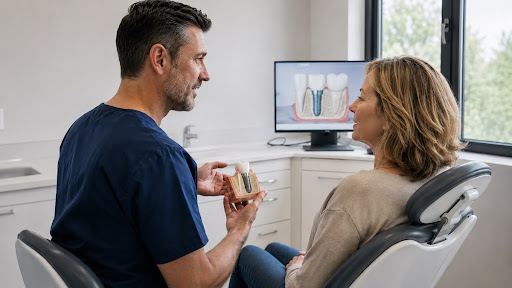
Minimally invasive implant techniques skip most of that. Using advanced 3D imaging and digital planning tools, a dentist can guide the implant into place through a tiny keyhole opening in the gum, with no flap, stitches, or lengthy downtime.
Arnold Dental & Implant Centre: Nottingham’s Complete Smile Solution
GDC-Registered Team | Implants to General Care | Trusted Local Dental Care
Arnold Dental provides end-to-end dental care for the whole family, from routine check-ups to life-changing implant treatments. Their fully managed implant process, from consultation through to restoration and aftercare, replaces missing teeth with natural-looking, permanent results, handled entirely in-house to save you time and cost
What you get:
✓Dental implants managed start to finish, including bespoke surgical guides and digital planning
✓Full smile restorations combining implants, bridges, veneers, and whitening
✓Preventive and restorative care, orthodontics, and facial aesthetics under one roof
✓All clinicians registered with the General Dental Council
Your smile deserves expert care from people who know your name.
How the Minimally Invasive Implant Process Works
Initial Consultation & Assessment
This stage determines eligibility. Your dentist will evaluate several key factors before recommending a minimally invasive approach, including bone density and volume, medical history, and the number and location of missing teeth. A CBCT scan creates a precise 3D image of your jaw, showing bone width, height, density, and the exact position of nerves and sinuses.
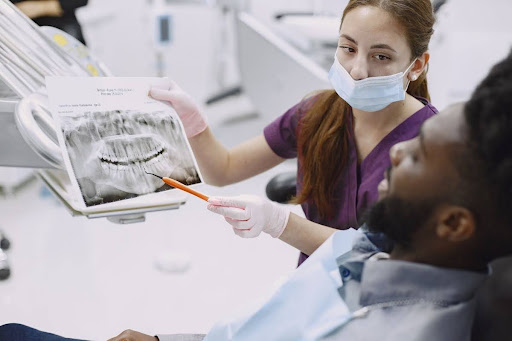
Imaging is one of the first steps in determining if you’re a suitable candidate for minimally invasive implant placement.
Digital Planning & Surgical Guide Design
Once the scans are complete, your dentist uses specialised implant planning software to map out the exact angle, depth, and position of each implant virtually.
This digital blueprint is then used to fabricate a custom surgical guide, a precisely fitted template that directs the drill and implant to the planned position during the procedure.
Implant Placement
On the day of the procedure, the surgical guide is seated over your gum or remaining teeth, and the dentist works through the pre-planned openings to place the implant with high accuracy.
Local anaesthetic numbs the area completely before placement begins. Some practices also offer sedation options for anxious patients. Once the implant is seated at the correct depth and angle, the dentist places a healing cap or temporary crown, and you’re done.
Healing & Final Adjustments
Although the procedure is quick, osseointegration still follows its natural timeline. Over the next three to six months, the titanium implant gradually fuses with the surrounding jawbone, creating a permanent, stable foundation. During this time, most patients wear a temporary restoration that looks and functions like a normal tooth.
Once osseointegration is confirmed, the temporary restoration is removed and replaced with the final permanent crown, bridge, or denture attachment. At this appointment, the dentist makes final bite adjustments to ensure everything fits comfortably and functions correctly under normal chewing forces.
Minimally Invasive Implant Techniques
Flapless Implant Placement (Keyhole Technique)
This is the closest thing to a true “non-surgical” implant. Instead of cutting and peeling back the gum tissue, the dentist creates a small circular punch (roughly the diameter of the implant itself) directly through the gum.
The implant is then guided precisely into position using a computer-generated surgical guide created from your CBCT scan and digital impression of your jaw.
There are no stitches required, bleeding is minimal, and most patients experience far less post-procedure discomfort compared to traditional methods.
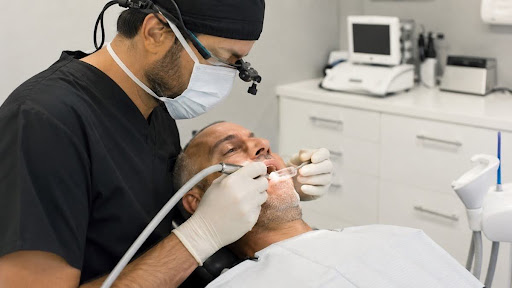
Magnification loupes give the dentist a closer view of the implant site throughout the procedure.
Mini Dental Implants (MDIs)
Mini dental implants are significantly narrower than standard implants. Their smaller size means less drilling during placement, with only a narrow pilot channel needed rather than a full-width osteotomy. This makes the procedure less invasive overall.
The trade-off is load-bearing capacity. Mini implants are strong, but they generally aren’t recommended for replacing back molars where chewing forces are highest, at least not as a long-term standalone solution in all cases.
Same-Day Implants
Also called immediate load implants or “teeth in a day,” same-day implants allow a temporary crown or bridge to be attached to the implant the same day it’s placed.
This doesn’t eliminate the healing period. Osseointegration still takes several months, but it means you leave the office the same day with functional, natural-looking teeth.
This approach can be combined with flapless techniques, making it one of the most patient-friendly implant options available today.
Pros of Dental Implants Without Surgery
Less Pain & Discomfort
Because flapless and mini implant techniques avoid cutting and peeling back gum tissue, they significantly reduce tissue trauma. Compared to traditional implant surgery, where swelling and discomfort are common in the first several days, the difference in patient experience is substantial.
Faster Recovery Compared to Traditional Implants
Traditional implant surgery typically involves a recovery period of a few weeks before patients feel fully comfortable returning to normal activity and eating habits. With minimally invasive implants, many patients report returning to their regular routine within a few days.
No Stitches or Major Incisions Required
One of the most anxiety-inducing aspects of traditional implant surgery for many patients is the thought of stitches and open wounds in the mouth. Flapless implant techniques remove the need for stitches and large incisions.
Lower Risk of Post-Procedure Infection
Fewer open wounds mean fewer entry points for bacteria. With flapless implant techniques, the gum tissue remains largely intact around the implant site, helping the tissue adapt more closely around the implant.
Same-Day Results Are Often Possible
Immediate load implants combined with flapless placement techniques mean that in many straightforward cases, patients can have a fully functional, natural-looking temporary tooth placed on the same day as the implant itself.
That said, same-day placement isn’t appropriate for every case. Bone density, bite forces, and the location of the implant all factor into whether immediate loading is safe.
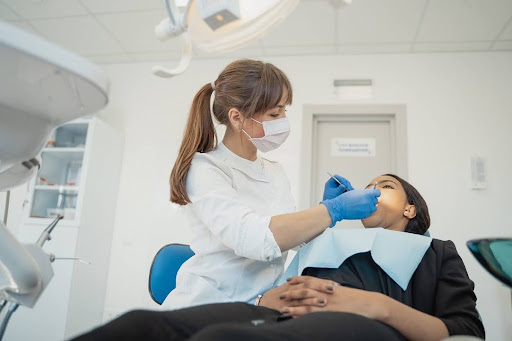
Patients can usually resume their normal routine within a few days of a minimally invasive implant procedure.
Cons of Dental Implants Without Surgery
Not Suitable for Everyone
Minimally invasive implant placement requires a specific minimum amount of bone volume and density. Patients who have experienced significant bone loss due to long-term tooth loss, advanced periodontal disease, or certain medical conditions may not qualify for flapless or keyhole techniques.
Relies Entirely on Imaging Accuracy
With flapless techniques, the dentist works entirely from the pre-planned surgical guide without directly seeing the bone during placement. This makes accurate 3D imaging and precise guide fabrication essential, as subtle bone inconsistencies that weren’t captured during scanning could affect implant positioning.
Mini Implants May Need Replacement Over Time
Because MDIs have a smaller diameter, there is less surface area in contact with the bone, making them more vulnerable to cumulative stress from biting and chewing over the years.
Some patients may need their mini implants replaced or reinforced over time, particularly in areas of the mouth that experience higher bite forces. This doesn’t make them a poor choice, but it is worth weighing against the lower upfront cost.
Why Choose Arnold Dental & Implant Centre for Your Implant
Modern implant techniques have made the process far less invasive than most people expect, and for many patients, flapless placement with guided surgery is a comfortable, efficient route to restoring missing teeth. The right approach for you depends on your bone health, the number of teeth being replaced, and your overall oral condition.
At Arnold Dental & Implant Centre, we use CBCT imaging, intraoral scanning, and 3D-printed surgical guides to plan and place every implant with precision, all managed in-house from consultation through to final restoration. Our fully digital workflow allows us to offer minimally invasive placement options where clinically appropriate, reducing recovery time and keeping the process as straightforward as possible. Book a consultation today to find out which implant approach is right for you.
Frequently Asked Questions (FAQs)
Can anyone get dental implants without surgery?
Not everyone is a good candidate. Minimally invasive techniques require adequate bone density, healthy gum tissue, and no conditions that would significantly impair healing. A CBCT scan during your consultation will give the clearest picture of what’s possible for your specific situation.
Are non-surgical implants more expensive?
Non-surgical dental implants can be a more cost-effective option for some patients, as they often require fewer visits to the dentist and have lower overall treatment costs. However, the cost may vary depending on the specific treatment plan and individual needs.
How long do non-surgical dental implants last?
Flapless full-size implants, once fully integrated with the jawbone, have the same long-term durability as traditionally placed implants and can last decades with proper care. Mini dental implants have a good record in the situations they’re designed for, particularly stabilising lower dentures. However, their smaller size means more mechanical stress over time in high-load positions.
Does the flapless implant technique hurt?
During the procedure, local anaesthetic is used to numb the area, so most patients feel pressure and movement rather than pain . Because no gum tissue is cut open, post-procedure soreness is typically mild, and most patients manage it with over-the-counter pain relief for the first day or two.
What services does Arnold Dental & Implant Centre provide beyond implants?
Arnold Dental & Implant Centre provides a full range of dental care under one roof, from routine check-ups and hygiene appointments to cosmetic treatments like whitening and veneers, restorative work including crowns and bridges, Invisalign orthodontics, and facial aesthetics. Our GDC-registered team uses advanced digital tools throughout every treatment, ensuring precision and consistency across all areas of your care.
*Note: The information in this post is for general guidance only and does not constitute professional medical or dental advice. Individual outcomes vary depending on personal health factors, and any pricing mentioned is indicative only and subject to change. Always consult a qualified dental professional before making any treatment decisions. Contact Arnold Dental & Implant Centre to book a consultation.