
How Long Do Dental Veneers Last: Lifespan & Maintenance Tips
Key Takeaways
- Porcelain veneers typically last 10 to 15 years, and with excellent care and good oral hygiene, some can last up to 20 years or more thanks to their strong, stain-resistant material.
- Composite veneers generally last 5 to 7 years, offering a more affordable, less invasive option, though they’re more prone to staining and chipping than porcelain veneers.
- Daily maintenance is key to extending the lifespan of veneers: brush twice a day with a non-abrasive toothpaste, floss regularly, and use an alcohol-free mouthwash.
- Avoid habits that can damage veneers, such as chewing on hard objects like ice or pens, grinding your teeth at night, and consuming excessive amounts of staining foods and drinks like coffee, red wine, and tobacco.
- Choose a trusted provider for lasting results. At Arnold Dental & Implant Centre, we offer high-quality veneer treatments precision-made for your smile, including innovative No Preparation 3D-Printed Veneers, delivered with a personalised approach for natural-looking, durable results.
How Long Do Dental Veneers Last?
Your veneers can last two decades or fail in five years, and the difference almost always comes down to what you do after you leave the dental chair.
Most patients see their porcelain veneers last comfortably between 10 and 15 years with standard care. Porcelain veneers can even reach the 20-year mark; however, this requires consistently excellent oral hygiene, a veneer-friendly diet, and regular professional check-ups, all working together over a long period.
On the other hand, composite veneers last about 5 to 7 years. And while they’re more affordable than porcelain veneers, they tend to degrade over time.
For both porcelain and composite veneers, the key to extending their lifespans is to brush twice daily, floss, and avoid biting hard objects or foods, among other maintenance practices outlined in this guide.
Arnold Dental & Implant Centre: Nottingham’s Complete Smile Solution
GDC-Registered Team | Implants to General Care | Trusted Local Dental Care

Arnold Dental provides end-to-end dental care for the whole family, from routine check-ups to life-changing implant treatments. Their fully managed implant process, from consultation through to restoration and aftercare, replaces missing teeth with natural-looking, permanent results, handled entirely in-house to save you time and cost
What you get:
✓Dental implants managed start to finish, including bespoke surgical guides and digital planning
✓Full smile restorations combining implants, bridges, veneers, and whitening
✓Preventive and restorative care, orthodontics, and facial aesthetics under one roof
✓All clinicians registered with the General Dental Council
Your smile deserves expert care from people who know your name.
Dental Veneers Lifespan
Not all veneers age the same way. The material your veneers are made of is the single biggest factor in how many years you can expect them to last.
Porcelain Veneers: 10–20 Years
Under normal conditions with proper care, most patients get between 10 and 15 years from their porcelain veneers, with a realistic upper range of 20 years for those who are especially diligent. They are stain-resistant, highly durable, and produce the most natural-looking results of any veneer material currently available.
The trade-off is that placing porcelain veneers requires removing a small but permanent amount of tooth enamel, making the process irreversible. However, that structural bond is also part of what makes porcelain veneers so stable and long-lasting once they are in place.
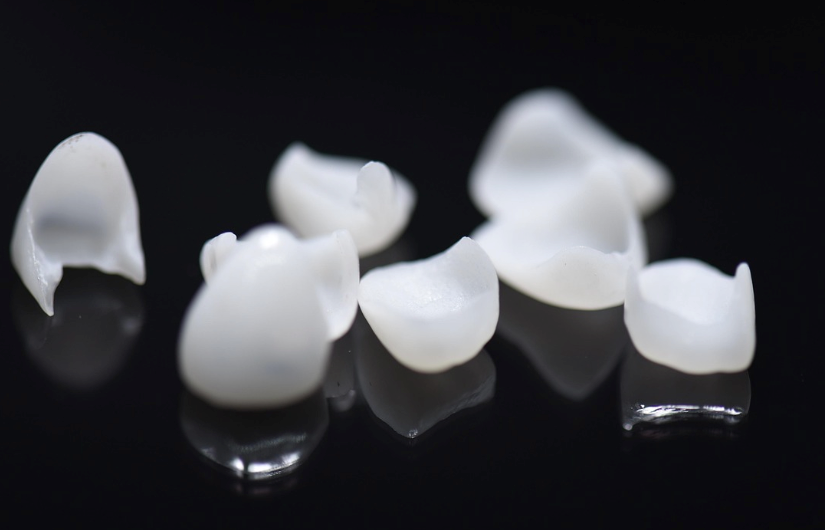
Porcelain veneers last longer than composite veneers, but may not always appear as natural.
Composite Resin Veneers: 5–7 Years
Composite resin veneers offer an accessible, lower-cost entry point into smile transformation, often placed in a single dental visit. However, the material is softer and more porous than porcelain, making it more prone to chipping, staining, and general wear over time.
The typical lifespan is 5–7 years, though patients who take exceptional care of their teeth can sometimes push it to 10 years.
One advantage composite has over porcelain is repairability. A chipped or cracked composite veneer can often be repaired chairside without full replacement, whereas a fractured porcelain veneer typically requires a completely new shell to be fabricated.
7 Maintenance Tips to Make Your Veneers Last Longer
The gap between a veneer that lasts 8 years and one that lasts 18 years almost always comes down to daily habits. Here are the seven habits that have the greatest measurable impact on veneer longevity.
1. Brush Twice Daily With a Soft-Bristled Toothbrush
Stiff or medium-bristled toothbrushes create micro-scratches on the veneer surface over time, dulling the finish and making the material more susceptible to staining. A soft-bristled brush used with gentle, circular motions cleans effectively without abrading the veneer surface.
Electric toothbrushes with pressure sensors are particularly useful because they prevent patients from accidentally brushing too hard.
Technique matters as much as bristle softness. Scrubbing the teeth horizontally with force is one of the most common brushing mistakes that veneer patients make. Instead, angle the brush at 45 degrees toward the gum line and use short, gentle circular strokes that clean both the veneer surface and the margin simultaneously.

Brush twice a day with the right technique to maintain your veneers.
2. Floss Daily to Protect the Gum Line
Flossing is a non-negotiable oral hygiene practice for veneer patients. The margin where each veneer meets the tooth is a prime location for plaque accumulation, and a toothbrush cannot reach it. Daily flossing removes that buildup before it hardens into tartar and begins eroding the gum tissue or the underlying tooth structure that supports the veneer.
For patients who find traditional string floss difficult to manoeuvre around veneers, a water flosser is an excellent alternative. It delivers a pressurized stream of water that effectively flushes debris and bacteria from the margin area, without risking catching or dislodging the veneer edge.

Flossing regularly helps remove plaque buildup and food debris that toothbrushes can’t reach.
3. Wear a Nightguard if You Grind Your Teeth
If your dentist has identified bruxism, you wake up with jaw soreness or headaches, or your partner reports hearing grinding sounds at night, a custom-fitted nightguard is one of the best investments you can make to protect your veneers.
Unlike over-the-counter boil-and-bite guards, a custom nightguard is fabricated from precise impressions of your teeth, distributing bite forces evenly and preventing the concentrated pressure that cracks veneers.
Wearing a nightguard consistently can add years to the lifespan of porcelain veneers in particular, since porcelain’s hardness actually makes it more prone to fracturing under the extreme, repeated pressure of grinding compared to natural enamel.
4. Avoid Biting Hard Objects & Foods
The front teeth, where veneers are most commonly placed, are designed for cutting and tearing, not for cracking hard objects.
Avoid biting directly into whole apples, hard bread crusts, ice cubes, and hard candies with your front veneered teeth. Instead, cut hard foods into smaller pieces and chew them with your back molars, which are built to handle that kind of force.
Beyond food, eliminating the habit of using teeth as tools is critical. Tearing open packaging, chewing pen caps, biting fingernails, or holding objects between the teeth all create unpredictable lateral and shear forces that veneers are not designed to withstand.
5. Limit Staining Beverages Like Coffee & Red Wine
Porcelain veneers are highly stain-resistant, but the bonding cement used to attach them to the tooth is not. Over time, regular exposure to deeply pigmented beverages can cause the cement at the veneer margins to discolour, creating a visible dark line where the veneer meets the tooth.
Composite veneers are even more susceptible, as the resin itself gradually absorbs pigment.
Drinking staining beverages through a straw significantly reduces direct contact with the veneer surfaces. Rinsing with water immediately after consuming coffee or red wine also helps flush pigment away before it has time to settle into the margins.
6. Use Non-Abrasive, Fluoride Toothpaste
Many popular teeth-whitening toothpastes contain abrasive particles designed to scrub surface stains from natural enamel. On veneers, however, those same abrasives can scratch and dull the surface finish over time, making the veneer look worn and more prone to staining.
Checking the Relative Dentin Abrasivity (RDA) score of your toothpaste is the most reliable way to know if it is safe for veneers. Anything with an RDA score below 70 is considered low-abrasion and suitable for veneer care.
Fluoride remains important even with veneers in place, because the natural tooth structure beneath and around the veneer still needs protection from decay. Look for a non-whitening, non-abrasive fluoride toothpaste specifically formulated for sensitive teeth or cosmetic restorations.
When in doubt, ask your dentist to recommend a specific toothpaste brand at your next check-up.
7. Keep Your Six-Month Dental Check-ups
Regular professional check-ups are where small problems get caught before they become expensive ones. During a routine visit, your dentist will examine the veneer margins for signs of wear, debonding, or decay in the underlying tooth, and professionally clean areas that home care cannot fully reach.
When you catch a veneer that is beginning to lift or a margin that is starting to stain early, you’ll likely only need a simple repair rather than a full replacement.
Looking for Long-Lasting Veneers? Try Arnold Dental & Implant Centre
How long dental veneers last depends on the material, your daily habits, and how consistently you attend check-ups. Porcelain veneers can reach 20 years with the right care; composite veneers typically last 5 to 7 years. Either way, the outcome is mostly within your control.
At Arnold Dental & Implant Centre, we fit veneers precisely to your teeth, including our No Preparation 3D-Printed Veneers for patients who want strong results with minimal tooth reduction. Built up from layers of super-strong, tooth-coloured material, they’re designed to look and feel just like natural teeth. To find out more about our unique veneer procedure, book a consultation with the team.
Frequently Asked Questions (FAQs)
Can dental veneers last 20 years?
Yes, porcelain veneers can last 20 years, but they require consistently excellent care. The 20-year figure is the upper range, not the average. Most porcelain veneers last between 10 and 15 years under standard conditions. Reaching two decades means brushing with a soft-bristled toothbrush twice daily, flossing consistently, wearing a nightguard if bruxism is present, avoiding hard foods with the front teeth, and attending every six-month check-up without gaps.
Do veneers require special toothpaste?
Veneers do not require a prescription toothpaste, but they do require a non-abrasive one. The key number to look for is the Relative Dentin Abrasivity (RDA) score. Anything below 70 is considered safe for veneers. Most whitening toothpastes, charcoal toothpastes, and baking soda formulas sit well above that threshold and will gradually scratch and dull the veneer surface with repeated use.
What happens to teeth when veneers wear out?
When a veneer reaches the end of its lifespan, it does not simply fall off cleanly. The veneer may begin to chip, crack, discolour at the margins, or partially debond from the tooth surface. Because placing porcelain veneers requires the permanent removal of a thin layer of enamel, the underlying tooth is permanently altered. It will always need some form of restoration covering it going forward.
Can a chipped veneer be repaired instead of replaced?
It depends entirely on the material. Composite resin veneers can often be repaired chairside in a single appointment. Your dentist adds new composite material to the chipped area, shapes it to match the original contour, and polishes it to blend with the surrounding veneer surface. Porcelain veneers, on the other hand, cannot be repaired the same way. A chipped or cracked porcelain veneer almost always requires full replacement with a newly fabricated shell.
Can I get veneers at Arnold Dental & Implant Centre?
Yes, at Arnold Dental & Implant Centre, we offer high-quality veneer treatments tailored to your unique smile and cosmetic goals. Our experienced team carefully matches the shade, shape, and fit to your natural teeth for seamless, long-lasting results. We also provide innovative options, such as No Preparation 3D-Printed Veneers, a minimally invasive solution that preserves healthy tooth structure while delivering beautiful cosmetic results.
*Note: The information in this post is for general guidance only and does not constitute professional medical or dental advice. Individual outcomes vary depending on personal health factors, and any pricing mentioned is indicative only and subject to change. Always consult a qualified dental professional before making any treatment decisions. Contact Arnold Dental & Implant Centre to book a consultation.