

Replacing Dentures with Implants: How it Works & Cost
Key Takeaways
- Implants offer significant advantages over traditional dentures. Unlike dentures, which slip, shift, and require ongoing adjustments, implants are anchored directly into the jawbone, providing stability and preventing gradual bone loss.
- The process of replacing dentures with implants typically starts with a comprehensive consultation and digital scans to assess your jawbone and treatment goals. The titanium implant posts are then surgically placed into the jawbone, followed by a healing period. Once healed, custom crowns, bridges, or implant-supported dentures are fitted to complete the restoration.
- Single implants replace individual teeth; implant-supported bridges replace multiple adjacent teeth with fewer implants; and full-arch solutions like All-on-4 or All-on-6 replace an entire row of teeth with just four to six strategically placed implants.
- Costs vary based on the type and number of implants needed. At Arnold Dental & Implant Centre, dental implants start from £2,500, with the final cost depending on the number of implants, the type of restoration, and any preparatory work such as bone grafting.
- Arnold Dental & Implant Centre delivers a fully managed in-house implant process for patients across Nottingham, combining digital planning, bespoke surgical guides, and GDC-registered clinicians to produce natural-looking, long-lasting results.
Replacing Dentures with Implants
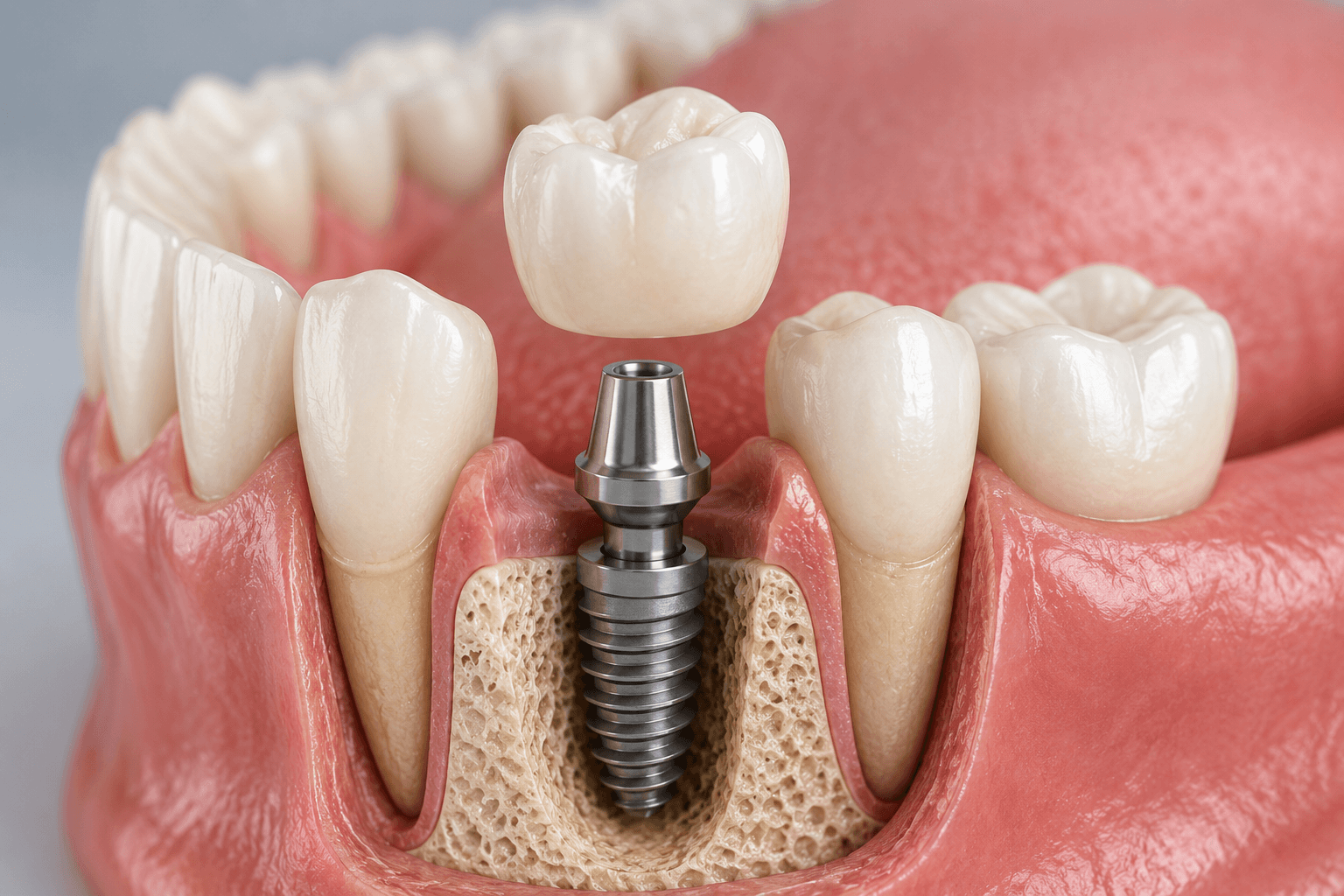
Implant dentures are a combination of two components: a set of prosthetic teeth (the denture) and titanium implant posts surgically placed into the jawbone.
Replacing dentures with implants involves surgically placing titanium posts into the jawbone, letting them fuse with the bone, and then attaching custom prosthetic teeth on top. The treatment typically takes between 3 and 6 months from start to finish, and at Arnold Dental & Implant Centre, prices start from £2,500, depending on the number of implants and the type of restoration required.
While many practices offer implants, fewer manage every stage of the journey in-house. At Arnold Dental & Implant Centre, our GDC-registered clinicians handle each step using digital planning, CBCT imaging, and bespoke 3D-printed surgical guides, removing the need to send patients across multiple providers.
Below, we break down how the process works in detail, what it costs in the UK, and how implant dentures compare to traditional ones, so you can decide whether making the switch is the right move for your smile.
Arnold Dental & Implant Centre: Nottingham’s Complete Smile Solution
GDC-Registered Team | Implants to General Care | Trusted Local Dental Care

Arnold Dental provides end-to-end dental care for the whole family, from routine check-ups to life-changing implant treatments. Their fully managed implant process, from consultation through to restoration and aftercare, replaces missing teeth with natural-looking, permanent results, handled entirely in-house to save you time and cost
What you get:
✓Dental implants managed start to finish, including bespoke surgical guides and digital planning
✓Full smile restorations combining implants, bridges, veneers, and whitening
✓Preventive and restorative care, orthodontics, and facial aesthetics under one roof
✓All clinicians registered with the General Dental Council
Your smile deserves expert care from people who know your name.
How the Implant Denture Process Works

Getting implant dentures is a multi-stage process that typically takes several months from start to finish.
1. The Surgical Placement of Titanium Posts
The first and most significant step is the surgical placement of the titanium implant posts into the jawbone. This is done under local anaesthesia, and sedation options are typically available for patients who experience dental anxiety.
The number of posts placed depends on the type of restoration. A single tooth implant requires one post, while implant-supported dentures for a full arch typically use four to six posts.
In cases where the jawbone has already experienced significant bone loss, a bone graft may be required before or during implant placement. This adds both time and cost to the overall process, but it’s a necessary step to ensure the implants have a solid foundation to fuse with.
2. Healing Time & Osseointegration
After the posts are placed, the healing phase begins. Osseointegration (the process by which titanium fuses with the jawbone) typically takes 3 to 6 months. During this time, patients are often given a temporary denture, so they’re not without teeth.
The success of this phase depends heavily on the patient’s overall health, bone density, and habits like smoking, which significantly reduce implant success rates. Your dental team will monitor healing with follow-up appointments and imaging throughout this period.
3. Attaching the Denture to the Implants
Once osseointegration is confirmed, the permanent denture is attached to the implant posts using abutments, small connector pieces that link the posts to the prosthetic. Depending on the design, the denture may be screwed in permanently (fixed) or designed to snap on and off for cleaning (removable implant-supported dentures, sometimes called snap-in dentures).
Most patients leave the fitting appointment with their permanent prosthetic in place and immediate feedback on how the bite feels. Minor soreness around the gum tissue is normal and typically resolves within a few days.
The True Cost of Replacing Dentures With Implants
Several variables determine what you pay for dental implants. The two biggest cost factors are the number of implants required and whether bone grafting is necessary.
At Arnold Dental & Implant Centre, the cost of dental implants starts from £2,500. To make treatment more accessible, we offer pay-as-you-go plans and practice plans designed to spread the cost into manageable monthly payments.
Implant Dentures vs. Traditional Dentures: The Real Differences
Side by side, implant dentures and traditional dentures look similar on the surface. But how they function, how they interact with your body, and how they affect your daily life are completely different stories.
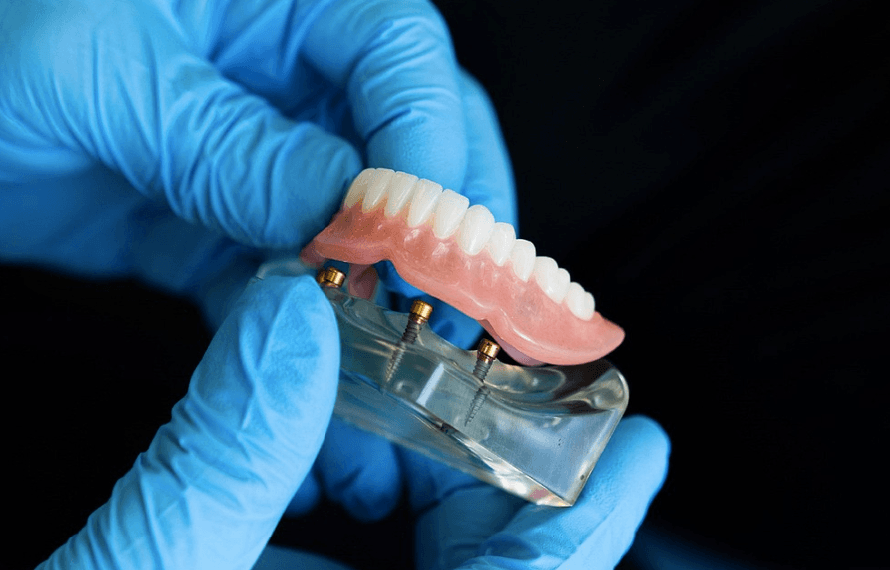
Traditional dentures tend to shift with slight movements, but implant dentures remain in a more fixed position.
Chewing Ability
The chewing power gap between these two options is significant. Traditional dentures sit on the gumline and shift under pressure, which is why most denture wearers instinctively avoid hard, crunchy, or chewy foods.
Implant dentures, anchored directly into the jawbone, can restore much of your natural biting force, often enough to comfortably eat foods like steak, raw vegetables, and apples that many denture wearers tend to avoid.

With implant dentures, you can comfortably bite into hard foods without worrying about them shifting under pressure.
Bone Loss Prevention
When a natural tooth root is removed, and nothing replaces it, the jawbone in that area begins to resorb because there’s no longer any stimulation telling the body to maintain that bone mass. Traditional dentures do nothing to stop this process.
However, titanium implant posts mimic natural tooth roots and restore the stimulation the bone needs, helping to significantly slow further deterioration.
Stability, Comfort, & Confidence in Daily Life
Ask any long-term traditional denture wearer what bothers them most, and slippage comes up almost immediately. Whether it’s a laugh at the wrong moment, a bite into something firm, or simply talking too quickly, the unpredictability of traditional dentures can affect confidence in very real ways.
On the other hand, implant dentures don’t move. They are locked into the jaw structure and behave almost just like natural teeth in everyday situations, and are more comfortable.
No Adhesives, No Slipping
With implant dentures, denture adhesive becomes entirely unnecessary. No more messy creams, no more midday reapplication, no more worrying about what you’re putting into your body with every meal.
The titanium posts hold everything in place around the clock, whether you’re eating, speaking, or sleeping (for fixed implant dentures).
Get Single & Multiple Dental Implants at Arnold Dental & Implant Centre
Replacing dentures with implants comes down to choosing a more stable, longer-lasting solution that restores both function and confidence. The process is well established, the technology is precise, and for most patients, the everyday improvement in chewing, speaking, and comfort makes the investment worthwhile.
At Arnold Dental & Implant Centre, we manage every step of the implant journey in-house, from digital planning and bespoke surgical guides through to fitting and aftercare, all delivered by our GDC-registered clinicians in Nottingham. If you want to find out whether switching from dentures to implants is right for you, book a consultation.
Frequently Asked Questions (FAQs)
Are implant dentures better than regular dentures?
Yes, implant dentures offer clear advantages over traditional dentures in many areas. They restore significantly more chewing function, help preserve jawbone density, remove the need for adhesives, and typically last two to three times longer than conventional dentures.
The main area where traditional dentures hold an advantage is upfront cost, but as the long-term numbers show, that initial savings often disappear within the first decade of wear.
How long do implant dentures last?
With proper care, implant dentures can last between 20 and 30 years, and in many cases, the implant posts themselves last a lifetime. The prosthetic denture attached to the implants may need to be replaced or refurbished over time due to normal wear, but the titanium foundation beneath it is designed for long-term durability.
This longevity is one of the primary reasons the long-term cost of implant dentures compares so favourably to traditional options.
How many implants are needed to support dentures?
For full-arch implant-supported dentures, most treatment plans call for 4 to 6 implants per arch. The All-on-4 system uses exactly four implants to maximise contact with available bone.
The All-on-6 system adds two implants for greater load distribution and stability, particularly beneficial for patients with higher bite forces or those replacing the lower arch. Meanwhile, for single tooth replacements, one implant post supports one crown.
Does getting implant dentures hurt?
Surgical placement is performed under local anaesthesia, so patients don’t feel pain during the procedure. Afterward, some soreness, swelling, and mild jaw discomfort are normal for the first few days and are typically manageable with over-the-counter pain relief.
Most patients report that recovery is more comfortable than they expected.
Why should I choose Arnold Dental & Implant Centre for dental implants?
At Arnold Dental & Implant Centre, we provide a fully managed in-house implant process, from initial consultation and digital planning to surgery, restoration, and long-term aftercare, all handled by our GDC-registered clinicians.
Our community-focused, family-oriented approach means you get consistent, familiar care in a comfortable setting, with treatments starting from £2,500 and flexible payment plans to spread the cost.
*Note: The information in this post is for general guidance only and does not constitute professional medical or dental advice. Individual outcomes vary depending on personal health factors, and any pricing mentioned is indicative only and subject to change. Always consult a qualified dental professional before making any treatment decisions. Contact Arnold Dental & Implant Centre to book a consultation.