

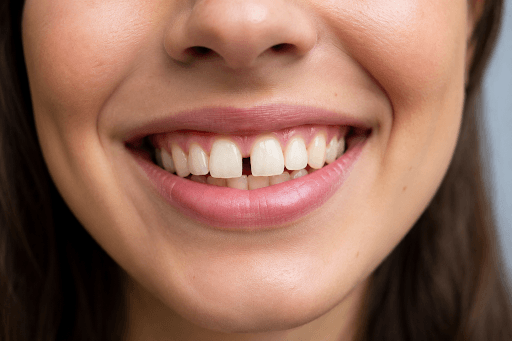
Veneers for Gap Teeth: Cost & Before and After
Key Takeaways
- Veneers are among the fastest, most reliable ways to close gaps between teeth. If you have a single noticeable gap between the front incisors or smaller spaces across the smile, veneers can close them in a fraction of the time it would take with braces or aligners.
- Composite and porcelain veneers each have a place. Composite veneers are sculpted directly onto the teeth in a single visit, while porcelain veneers are custom-made in a lab and generally last longer, costing £700–£1,400 per tooth, depending on location and practice.
- The price for veneers varies, depending on the number of teeth being treated, the type of material, and the dental practice. At Arnold Dental & Implant Centre, the cost of veneers starts at £436.
- Realistic before-and-after results depend on the case. Most gap tooth cases produce natural-looking results, closing the gap, evening out tooth length, and creating a balanced, symmetrical smile.
- Visit Arnold Dental & Implant Centre for expert veneer care. As an established practice, we offer No-Preparation 3D-Printed Veneers, ideal for gaps, chips, and discolouration.
Can Veneers Close Gaps in Teeth?
Gaps between teeth are one of the most common reasons people consider cosmetic dentistry. While some embrace the look, others find it affects their confidence in photos, professional settings, or everyday conversations. Starting from £436 at Arnold Dental & Implant Centre, veneers are a fast, minimally invasive way to close gaps and reshape the smile, often delivering noticeable results in a fraction of the time it would take with braces or aligners.
Instead of physically moving teeth, they reshape and extend the tooth surface to eliminate visible spacing. The result looks natural, feels comfortable, and can be completed in just two appointments.
The sections below cover everything you need to know about using veneers for gap teeth, including how composite and porcelain veneers compare, what the treatment process looks like, realistic before-and-after expectations, and how much you can expect to pay in the UK.
Arnold Dental & Implant Centre: Nottingham’s Complete Smile Solution
GDC-Registered Team | Implants to General Care | Trusted Local Dental Care

Arnold Dental provides end-to-end dental care for the whole family, from routine check-ups to life-changing implant treatments. Their fully managed implant process, from consultation through to restoration and aftercare, replaces missing teeth with natural-looking, permanent results, handled entirely in-house to save you time and cost
What you get:
✓Dental implants managed start to finish, including bespoke surgical guides and digital planning
✓Full smile restorations combining implants, bridges, veneers, and whitening
✓Preventive and restorative care, orthodontics, and facial aesthetics under one roof
✓All clinicians registered with the General Dental Council
Your smile deserves expert care from people who know your name.
How Veneers Fix Gap Teeth
Veneers work by bonding a thin layer of material, either porcelain or composite resin, to the front surface of the tooth. When placed on teeth adjacent to a gap, the veneers are shaped slightly wider than the natural teeth, visually filling and closing the space between them.
With traditional veneers, the process starts with your dentist lightly preparing the surface of the teeth on either side of the gap, removing a small amount of enamel so the veneer sits flush against the tooth. Custom-made veneers are then fabricated to be slightly wider than your natural teeth, expanding the visible width of each tooth just enough to close the gap when bonded in place.
Newer options, such as No-Preparation 3D-Printed Veneers, skip the enamel removal stage entirely. These are designed using digital scans and bonded directly to the existing tooth surface, preserving healthy tooth tissue while still closing the gap. The final result is designed to look like your natural teeth, evenly spaced, uniform in colour, and proportionate to your smile.
For composite veneers, the process is even more direct. The resin is sculpted directly onto the tooth surface chairside, meaning your dentist shapes and closes the gap in a single visit, without any lab work.
Veneers work best for small to moderate gaps. They are particularly well-suited for patients who also want to address other cosmetic concerns, such as discolouration, chips, or uneven tooth shape.
Veneers for Gap Teeth: Before & After Results
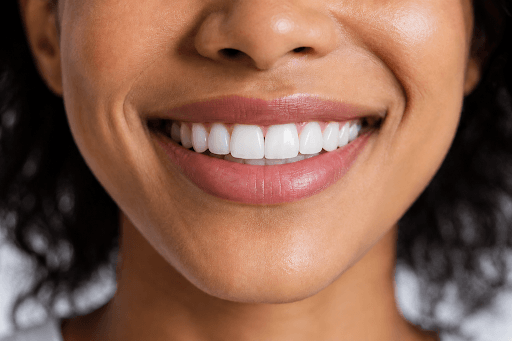
Before-and-after results for veneer gap closure can be among the most striking changes in cosmetic dentistry.
What Changes After Veneers on Gap Teeth
The most obvious change is the elimination of the gap itself, but the full transformation goes further than that. Veneers also correct the overall shape, length, and colour of the treated teeth simultaneously.
A patient might come in with a gap, slightly discoloured enamel, and uneven edges, and leave with teeth that are uniformly white, properly shaped, and perfectly aligned. The smile looks cohesive rather than patched, which distinguishes a well-executed veneer case from a basic cosmetic fix.
How Many Veneers You Need to Close a Gap
The answer depends on the size of the gap and your overall smile goals. For a small central diastema (a gap between the two upper front teeth), just two veneers, one on each tooth, are often enough.
However, if the gap is larger or if you want a more balanced, symmetrical smile overall, your dentist may recommend four to eight veneers across the front teeth. This prevents the two treated teeth from looking disproportionately wide compared to the rest of your smile.
How Much Do Veneers Cost?

Dental veneers are a private treatment in the UK, so individual practices set prices.
Veneer costs vary depending on the material, the number of teeth being treated, the dentist’s experience, and the clinic’s location.
Composite veneers are sculpted directly onto your teeth in a single appointment, making them the more affordable option. Meanwhile, porcelain veneers are custom-made in a dental laboratory and bonded to the tooth, adding high cost but producing longer-lasting, more natural-looking results.
At Arnold Dental & Implant Centre, we provide No Preparation 3D-Printed Veneers from £436.00 on pay-as-you-go and practice plans.
What Affects the Cost
Several factors influence your final price:
- Material choice: Porcelain costs significantly more than composite due to lab fees, durability, and aesthetics.
- Number of veneers: More teeth means more cost, though discounts may apply for full smile makeovers.
- Case complexity: Bite issues, worn teeth, or alignment problems can require additional planning and visits.
Porcelain vs. Composite Veneers for Gap Teeth
Choosing between porcelain and composite veneers comes down to three things: your budget, how long you want them to last, and how natural you want the final result to look. Both materials can effectively close a gap, but they perform very differently over time.
Porcelain Veneers: Durability & Natural Appearance
Porcelain veneers are custom-made in a dental laboratory, crafted to match the exact shape, size, and translucency of your natural teeth. The material itself mimics the light-reflecting properties of real enamel, which is why porcelain results consistently look more natural, especially in photos and direct light.
Because porcelain veneers are fabricated in a lab, there is typically a waiting period between your preparation appointment and your fitting, usually around one to two weeks. During this time, temporary veneers protect your prepared teeth. The final fit is then permanently bonded using dental adhesive, creating a strong, lasting bond to the tooth surface.
Composite Veneers: Lower Cost, Faster Results
Composite veneers are made from a tooth-coloured resin that is applied and sculpted directly onto your teeth during a single appointment. There is no lab involved, which reduces both costs and time commitment.
The trade-off is longevity. Composite resin is more porous than porcelain, which means it absorbs stains from coffee, tea, red wine, and other pigmented foods over time. The surface can also chip more easily under pressure.
Visit Arnold Dental & Implant Centre for the Best Veneers
Backed by GDC-registered clinicians and a fully managed in-house treatment process, we deliver natural-looking results designed to last.
Closing a gap with veneers can deliver fast, natural-looking results, but the outcome depends on the type of veneer, the size of the gap, and the precision of the planning behind it. Choosing the right material and a practice that uses modern digital techniques makes a significant difference to how the final smile looks and lasts.
At Arnold Dental & Implant Centre, we offer No-Preparation 3D-Printed Veneers as a reversible, tissue-preserving option for closing gaps and reshaping smiles. If you want to find out whether veneers are the right fit for your smile, book a consultation with our team.
Frequently Asked Questions (FAQs)
Can veneers fully close a large gap between front teeth?
Veneers can fully close small to moderate gaps, typically those measuring 2–3mm or less. For larger gaps, the veneers would need to be made significantly wider than the natural tooth, which can result in a bulky, disproportionate appearance.
In those cases, most dentists recommend a short course of orthodontic treatment to partially close the gap first, followed by veneers to refine the final look.
Do veneers for gap teeth look natural?
Yes, when properly designed and placed, veneers for gap teeth can look very natural. Porcelain veneers, in particular, are fabricated to match the shade, translucency, and shape of your surrounding teeth, so the treated teeth are designed to blend in with your smile rather than stand out.
Are veneers permanent once placed on gap teeth?
Traditional porcelain veneers are considered a permanent treatment because they are placed after a small amount of enamel is removed from the tooth surface during preparation. Composite veneers are often considered semi-permanent or reversible.
At Arnold Dental & Implant Centre, our No-Preparation 3D-Printed Veneers preserve healthy tooth tissue, making them a reversible option. All veneers will eventually need replacing as they age, typically after 3 to 7 years for composite and 10 to 15 years for porcelain.
Is it better to get braces or veneers to fix a gap?
The right answer depends entirely on the size of the gap, your age, your budget, and what else you want to correct about your smile. Neither option is universally better, because they solve the same problem in fundamentally different ways. Braces and aligners physically move teeth to close a gap over time, while veneers reshape the appearance of the tooth without moving it.
*Note: The information in this post is for general guidance only and does not constitute professional medical or dental advice. Individual outcomes vary depending on personal health factors, and any pricing mentioned is indicative only and subject to change. Always consult a qualified dental professional before making any treatment decisions. Contact Arnold Dental & Implant Centre to book a consultation.